

A practical guide
Getting married in Italy: a practical guide for foreign couples
This guide covers what foreign couples usually ask me before planning a wedding in Italy: which region to choose, when to come, which kind of ceremony is right for you, what documents you need and how to organise the practical side from abroad.
Where · The regions · When · Ceremony · Documents · Planning · Food & wine · Before you travel · FAQ
Where
Where to get married in Italy
Italy is a long country, and each region feels like a different place: lakes and mountains in the north, hills, vineyards and art cities in the centre, the sea, the islands and the volcanoes in the south.
The right choice depends on the kind of day you have in mind, how far your guests are travelling and how much time you’d like to spend exploring before and after the wedding.
A note on this guide
This isn’t a complete guide to Italy, and it doesn’t try to be. It comes from years of photographing weddings across the country: the places I know, the roads I’ve driven, the light I’ve worked in.
It doesn’t replace a wedding planner or the advice of your consulate, especially for documents and legal requirements.
If you have a question about a region, a venue, the timing of the day or anything else, write to me and I’ll do my best to answer. And if you think something is missing, tell me: I’ll be glad to add it.
The regions
Italy, almost region by region
Tuscany
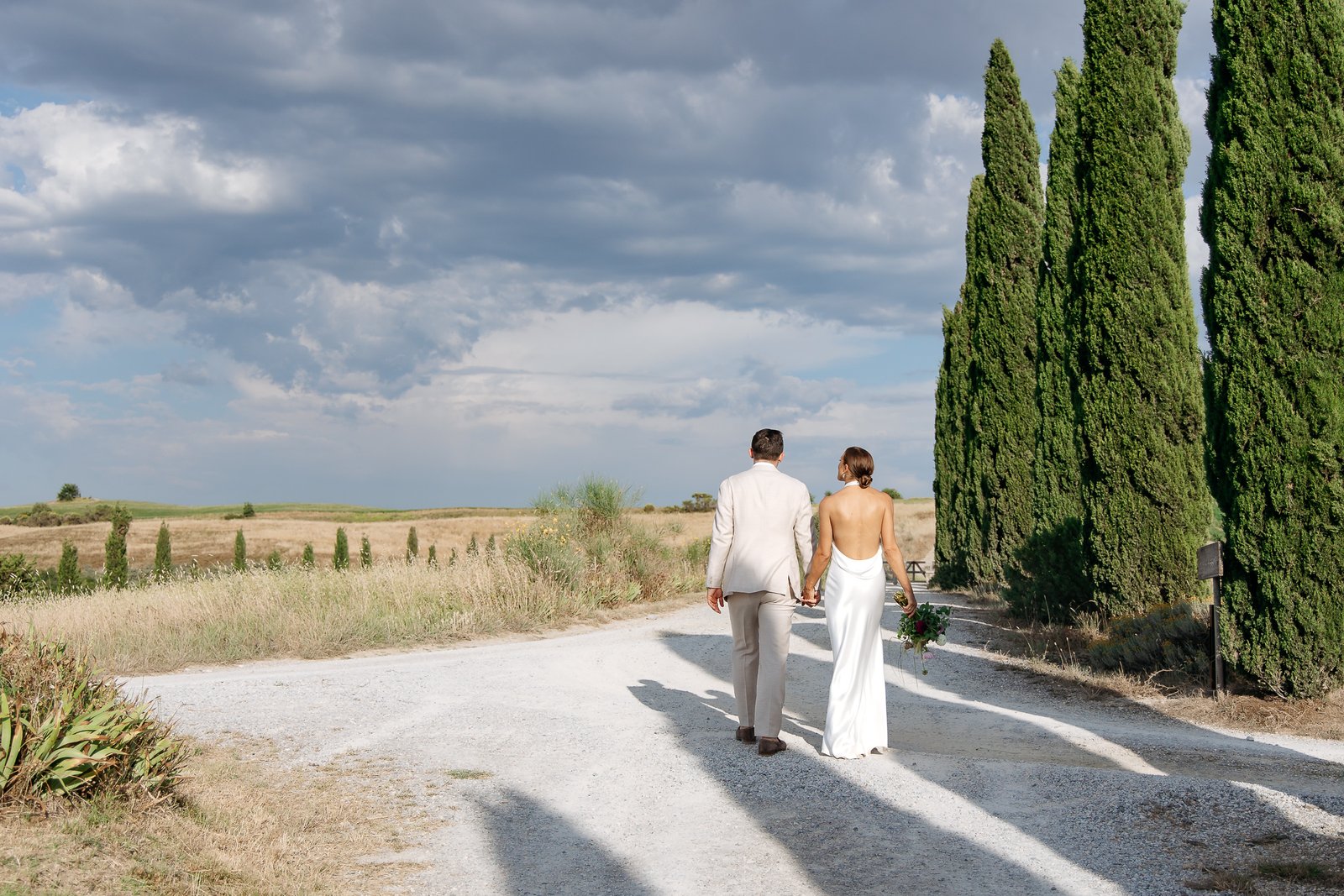
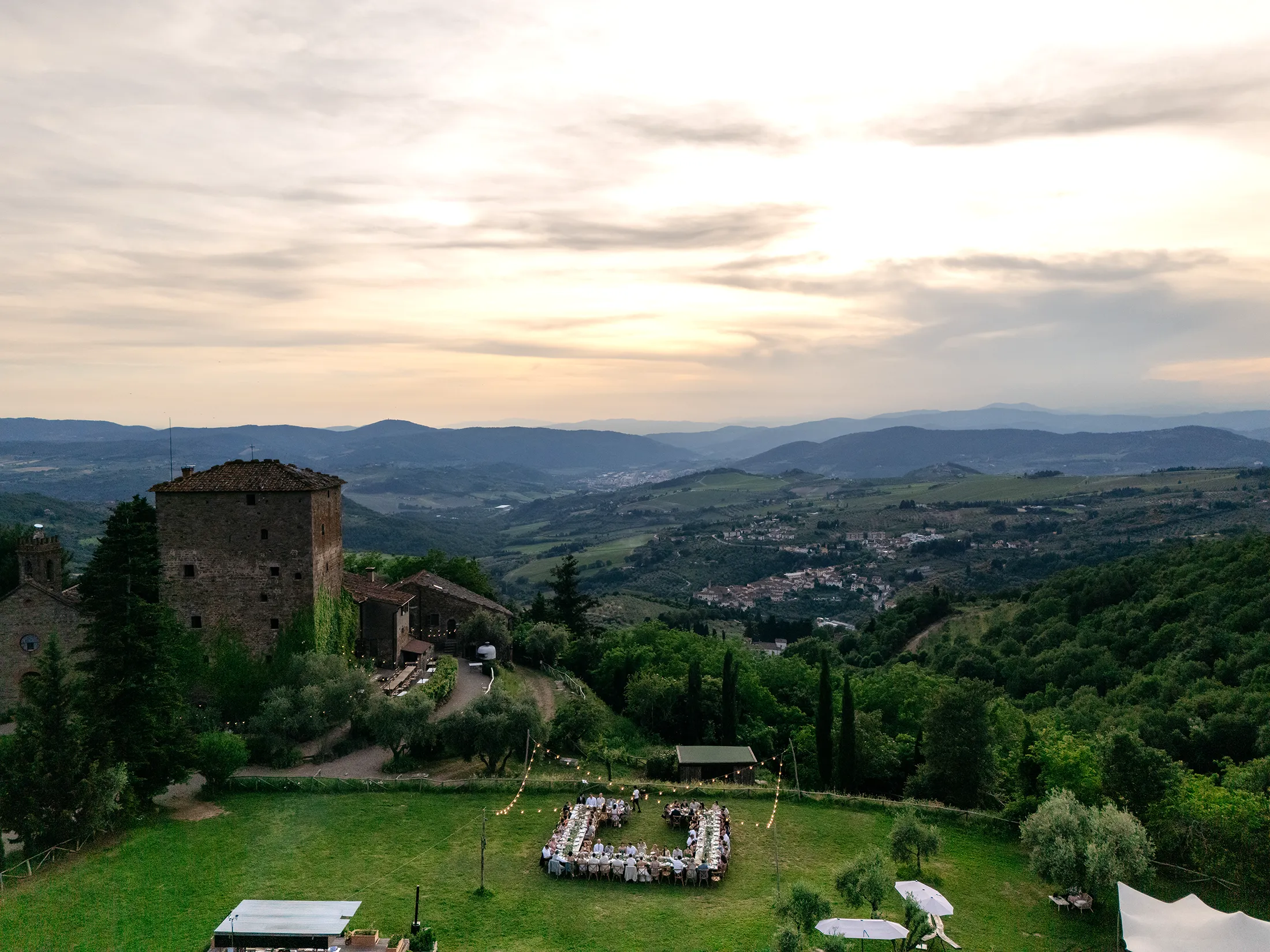
The best known region for weddings in Italy: historic villas, castles and wine estates among cypresses and vineyards, from the Val d’Orcia to the Chianti and Florence. It’s also the most requested, so the best venues book early.

The lakes
Lake Como, Lake Garda and the smaller Lake Iseo combine water, mountains and elegant villas with gardens on the shore. A good choice in summer, when the air by the water is fresher than in the countryside.

Amalfi Coast and Sorrento
Villages clinging to the cliffs, terraces over the sea and lemon groves. Spectacular, but with narrow roads and many steps: the logistics need careful planning.

Sicily
Baroque towns, Etna, the sea and a cuisine of its own. Summers are long and hot, so late spring and early autumn are often the best time.

Le Marche and Umbria
Rolling hills, medieval villages and fewer crowds. Similar in feeling to Tuscany, but quieter and often more affordable.

The south
Puglia and beyond
Whitewashed towns, olive groves and masserie, the old fortified farmhouses turned into venues, with the sea never far away.
Beyond Italy
Further away
I also photograph weddings abroad, in Greece, Spain and Mexico.
See a wedding in Tulum, Mexico →
Still deciding?
Not sure which region?
Tell me your date and the kind of day you have in mind. I’ll be happy to share what I know about the places you’re considering.

When
The best time to get married in Italy
May, June and September are the most requested months all over Italy: long days, mild evenings, and countryside that is green in spring and golden in late summer.
July and August are hot, especially in the south and in the countryside of central Italy. The lakes and the mountains are fresher, and by the sea an evening breeze usually helps.
August is Italy’s holiday month. Around the 15th, Ferragosto, many businesses close, and roads and beaches are at their busiest.
April and October are quieter, with softer light and often better prices, but the weather is less predictable and the days are shorter.
In the south and in Sicily the season is longer, and late spring and early autumn are often the most pleasant time. In every season, have a plan B for rain.
Ceremony
Civil, religious or symbolic ceremony?
Civil ceremony
Legally binding and recognised in your home country. It takes place in a town hall or in a venue authorised by the local municipality. You’ll need documents from your country and a declaration at the town hall a few days before the wedding: more about this below.
Catholic ceremony
In a church, with documents and a pre-marriage course arranged through your home parish. It can be legally valid at the same time.
Symbolic ceremony
The most popular choice for foreign couples. You get legally married at home, and in Italy you can celebrate anywhere you like: a garden, a terrace over the sea, a villa on a lake, with your own words and your own officiant.
Same-sex couples
Italy recognises civil unions for same-sex couples, and symbolic ceremonies are always possible.
Carlo and Christian celebrated theirs on Lake Como.
Paperwork
Documents for a civil wedding in Italy
Free to marry
Each foreign spouse needs a document proving they’re free to marry. Its name and how to get it depend on your nationality.
For example, US citizens usually need an Atto Notorio from an Italian consulate and a sworn declaration at a US consulate in Italy, while British citizens apply for a Nulla Osta.
Apostille and translation
Documents issued abroad, such as birth certificates or divorce decrees, usually need an apostille and a certified Italian translation.
At the town hall
Everything is filed with the marriage office of the town where you’ll get married. A few days later you make a declaration of intent there, with two witnesses and, if you don’t speak Italian, an interpreter.
Arrive early
Plan to be in Italy at least a few working days before the wedding for these appointments.
Some documents are only valid for a few months, so don’t prepare them too early.
Married before?
You’ll need proof that the previous marriage has ended. Italian law also sets a waiting period of 300 days after a divorce before a woman can remarry, with some exceptions.
Check first
Requirements change, and they vary from country to country and even from town to town. Always check with the Italian consulate in your country, or let a local planner take care of the paperwork.
Planning
Planning a wedding in Italy from abroad
Wedding planner
Not mandatory, but very useful if you don’t speak Italian or you’re planning a civil ceremony. Many villas also have their own coordinator who can help with the practical side.
How far ahead
For May, June and September, the most popular venues are often booked 12 to 18 months ahead, and photographers, caterers and florists follow the same calendar.
Budget
Costs vary a lot from region to region. Tuscany, the Amalfi Coast and Lake Como are the most expensive; Le Marche, Umbria and Puglia often offer more for the same budget.
Getting there
Rome, Milan and Venice have the best intercontinental connections. For the south, Naples, Bari and Catania are well connected with the rest of Europe.
Getting around
High-speed trains link the main cities. For villas in the countryside you’ll need a car or a transfer, and most historic centres are limited traffic zones (ZTL), closed to cars without a permit.
Your guests
Many guests turn the wedding into a holiday. A short list of places to stay and things to see nearby, and a shuttle on the wedding day, make a big difference.
Food & wine
Food and wine
Food is one of the reasons many couples choose Italy, and every region has its own cuisine.
In the north, risotto, fresh pasta and sparkling Franciacorta or Prosecco; in Tuscany, handmade pasta, Florentine steak and red wines like Chianti and Brunello; in the south and in Sicily, fish, mozzarella, lemons and wines grown on volcanic soil.
An Italian wedding dinner is long: an aperitivo, several courses and the cake, often late in the evening. Guests usually take home a bomboniera, a small gift with sugared almonds called confetti.
Caterers are used to vegetarian, vegan and gluten-free menus, but let them know early.
Practical notes
Before you travel
Currency
Italy uses the euro. Cards and contactless payments are accepted almost everywhere, but it’s useful to have some cash for small bars, markets and tips.
Tipping
Tipping isn’t expected as it is in the United States. A cover charge (coperto) is often on the restaurant bill; rounding up or leaving a few euros for good service is appreciated.
Electricity
Italy runs on 230 V, 50 Hz, with type C, F and L sockets. Most phone and camera chargers only need a plug adapter; hair dryers and straighteners made for 110 V need a voltage converter, or buy one locally.
Phone and internet
Guests from the EU roam at home prices. From outside the EU, an eSIM or a local SIM card is usually cheaper than international roaming. In the countryside the signal can be weak: ask the venue for the Wi-Fi.
Driving
Drivers with a licence from outside the EU usually need an International Driving Permit. Most rental cars are manual: if you need an automatic, book it in advance.
Opening hours
In small towns many shops close for a few hours after lunch and on Sunday afternoons, and some close for part of August.

Questions
Questions about getting married in Italy
Yes. A civil ceremony, or a Catholic one, can be legally valid, as long as you bring the documents required by your country. Many foreign couples prefer to marry legally at home and celebrate in Italy with a symbolic ceremony, which needs no paperwork.
For a civil ceremony, plan to be in Italy at least a few working days before, for the appointments at the town hall. For a symbolic ceremony there are no legal requirements, but a couple of days to rest and see the place make the day much easier.
It isn’t mandatory. A local planner is very useful for civil ceremonies, paperwork and large weddings; for a small wedding at a villa, the venue’s own coordinator is often enough.
May, June and September are the most requested. July and August are hot, especially in the south and inland; the lakes are fresher in summer, and in the south the season lasts longer into the autumn.
Italy recognises civil unions for same-sex couples, and a symbolic ceremony is always possible, anywhere you like.
For the most popular venues in May, June and September, 12 to 18 months ahead is common. Photographers, caterers and florists follow the same calendar.
Yes. Most of my weddings are in Tuscany, but I photograph weddings all over Italy, from the lakes to Sicily, and sometimes abroad.
Kind words
“
We hired Luca for our intimate wedding in Tuscany, and he was absolutely the right choice. His profile stood out among many, and after a video call, we instantly felt he was the perfect fit. Luca was professional, attentive, and incredibly friendly. He brought exactly the kind of energy we wanted for our small celebration of seven people.
Iliana · Private villa, Argentario
Something you’d like to know that isn’t here? Write to me and I’ll add it to the guide.
Check my availability
Planning a wedding in Italy?
Tell me your date, the region you’re thinking of and roughly how many guests. I’ll be happy to share what I know about the places you’re considering.
RECENT WEDDINGS IN ITALY

Il Rigo wedding photographer
Nicole and James, from Connecticut, got married at Il Rigo in the Val d’Orcia: a…

Monte Isola wedding photographer
Alyssa and Boston came from Washington to get married at Castello Oldofredi on Monte Isola,…

Sorrento wedding photographer
Kim and Alex came from Washington for a three-day wedding in Sorrento: a welcome party…
Cortona wedding photographer
Chris and Ari came from the USA for a relaxed, joyful wedding at La Corte…
